
Suzuki eVitara SUV
From the Japanese small car maker, this is their first step into the electric vehicle space.
The Suzuki eVitara SUV entered the market in May joining a rapidly growing EV segment dominated by sharply priced small Chinese SUVs. A highly competitive segment with 28 players under $45,000 and 25 over $45,000.
The new electric eVitara arrived in two models – the front wheel drive Motion at $49,990 drive-away, and the model I tested, the all-wheel-drive Ultra at $58,990 drive-away featuring Suzuki’s ALLGRIP-e system. And here-in lies the problem facing many of the established Japanese and European players in the market – this price nearing $60,000 is far above what the new breed of compact Chinese SUVs are offering. And it’s not just Suzuki who is witnessing the structural change in the market and the pressure on pricing – the lower cost Chinese models are putting enormous strain on the long-established brands right across the car market.

Having said that, price and price alone is not the only criteria for buying a new car but at this end of the market it plays a huge role in the decision making. With respect to the Suzuki eVitara Ultra SUV it’s a shame because as I’ll detail below this is an impressive small SUV in a number of areas.
In short, a somewhat rugged looking compact SUV with chunky styling and surprisingly roomy inside for four good sized adults. Whereas the front drive Motion features a 49KW battery with a 344km range the all-wheel drive Ultra gains a larger 61kWh battery lifting the range to a quoted 395km. Both models feature a choice of Eco and Sport drive modes and drive through a single-speed reduction gear transmission.

Standard fare on the eVitara Motion features 18-inch alloy wheels, automatic headlights, rain sensing wipers, a 360-degree camera, selectable driving modes, single zone climate control, fabric upholstery, a four-speaker sound system and a 10.1-inch central touchscreen including Apple CarPlay and Android Auto.
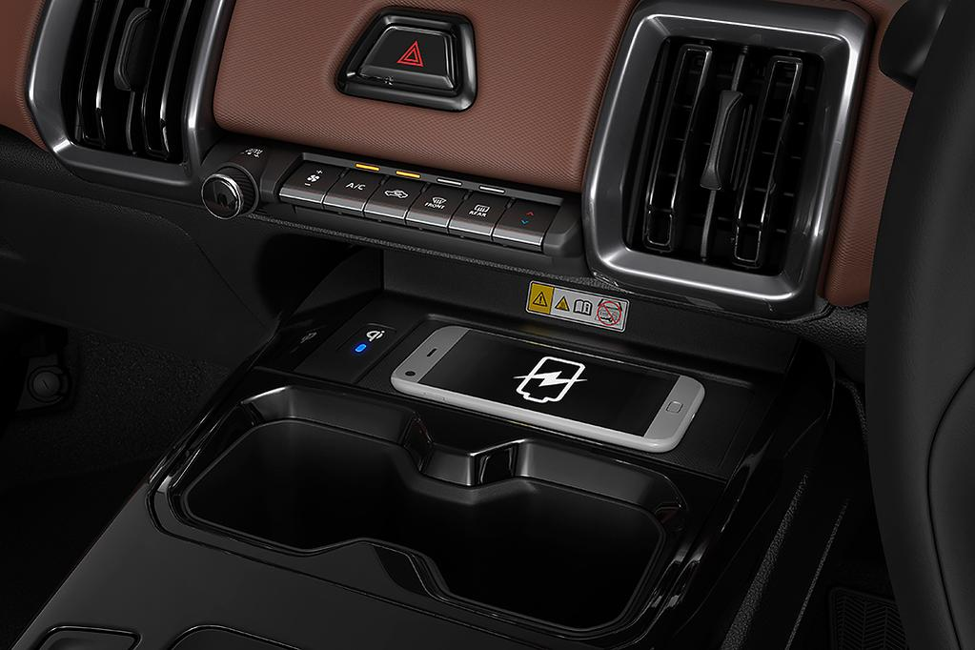
Apart from the addition of all-wheel-drive the better-equipped eVitara Ultra adds a panoramic sunroof, wireless phone charging, a power driver’s seat, heated front seat, an Infinity by Harmon sound system with a subwoofer, combination synthetic leather and fabric seats, synthetic leather steering wheel, ambient lighting, adaptive high beam, front LED headlights and front and rear USB ports.

As with most EV SUVs, both Suzuki eVitara models lack a spare wheel and come only with a tyre repair kit.
Safety features include seven airbags, front and rear parking sensors, adaptive cruise control, autonomous emergency braking, lane keep assist with departure prevention, forward collision warning, blind spot monitoring and rear cross traffic alert. Local testing saw it achieve a four-star ANCAP safety rating, failing to gain five stars due to the lack of a centre airbag between the front seats which affected its side impact score.
With this model built in India alongside the smaller Fronx model Suzuki was put on notice with a rear seat belt retractor failure on the Fronx during testing on top of an earlier one-star result for its small Swift hatchback. Structural improvements to the Swift subsequently lifted its rating to three-stars and the company has been anxious since to restore confidence in its products from a safety standpoint.

From a visual standpoint the Suzuki eVitara takes on a somewhat muscular stance with sharp and chunky lines, the company suggesting it was inspired by the silhouette of a crouching Cheetah. Inside, thankfully, Suzuki has maintained the practicality and classic ergonomic layout that it has been long noted for and not drawn to the touch elements that characterise many of the Chinese small SUVs. Controls for aircon are physical with tactile switches and a layout that’s conventional and pleasing to use.
Also, the materials in the higher-spec Ultra model give it a touch of class. Cabin space for a small SUV excels in both seat rows with good seat comfort while the two-tone tan interior adds to the appeal. In short, the driving position is spot on and one feels immediately at home with the controls, placement of the digital driver display and its general functionality. And here in is another comparison, with many of the small Chinese SUVs that give the impression you are driving a computer screen rather than a car. And I also like the circular gear selector which is modern and intuitive. And, the floating centre console, is another example of practical and pleasing design.

From a driving perspective the eVitara Ultra purveys and strong and positive level of control with excellent steering weight and maneuverability despite the cars overall weight. Tipping the scales at 1900 kgs in all-wheel-drive form does not impede performance and in Eco or Sport modes its eager and surprisingly sporty. Only trouble is the usage rate on test ran at 19kWh/100km limiting the range. From the company’s stated 395km range under the WLTP formula I could only manage around 325km, and it differed little under a light or heavy throttle or whether in the city or more open driving conditions.
On my 11kW AC home charger it took just under 5½ hours to charge from 10 percent to full capacity however the company suggests that on a DC fast charger from 10/80 percent would take around 45 minutes.
However, the overall driving experience is very satisfying with great steering, excellent braking from four-wheel ventilated discs and a pleasant ride on smooth surfaces but the overall weight penalises the ride on rougher surfaces where the suspension can become a little overwhelmed.
There’s so much to like in this compact electric Suzuki Vitara Ultra SUV but despite the many appealing features one can’t overlook the exalted price of $58,990 drive-away and the somewhat limited driving range. This Japanese small car company has long lived on a strong reputation for affordable, reliable and durable design but at this price it is clearly outgunned by many small Chinese SUVs with lower price tags.
Just how you trade off an excellent reputation at this end of the market for a dearer price is a difficult decision to make.
Warranty: 5-years/ unlimited kilometre. Battery warranty: 8-years/160,000km.
Service intervals: 12 months or 20,000km whichever comes first.


Comments